
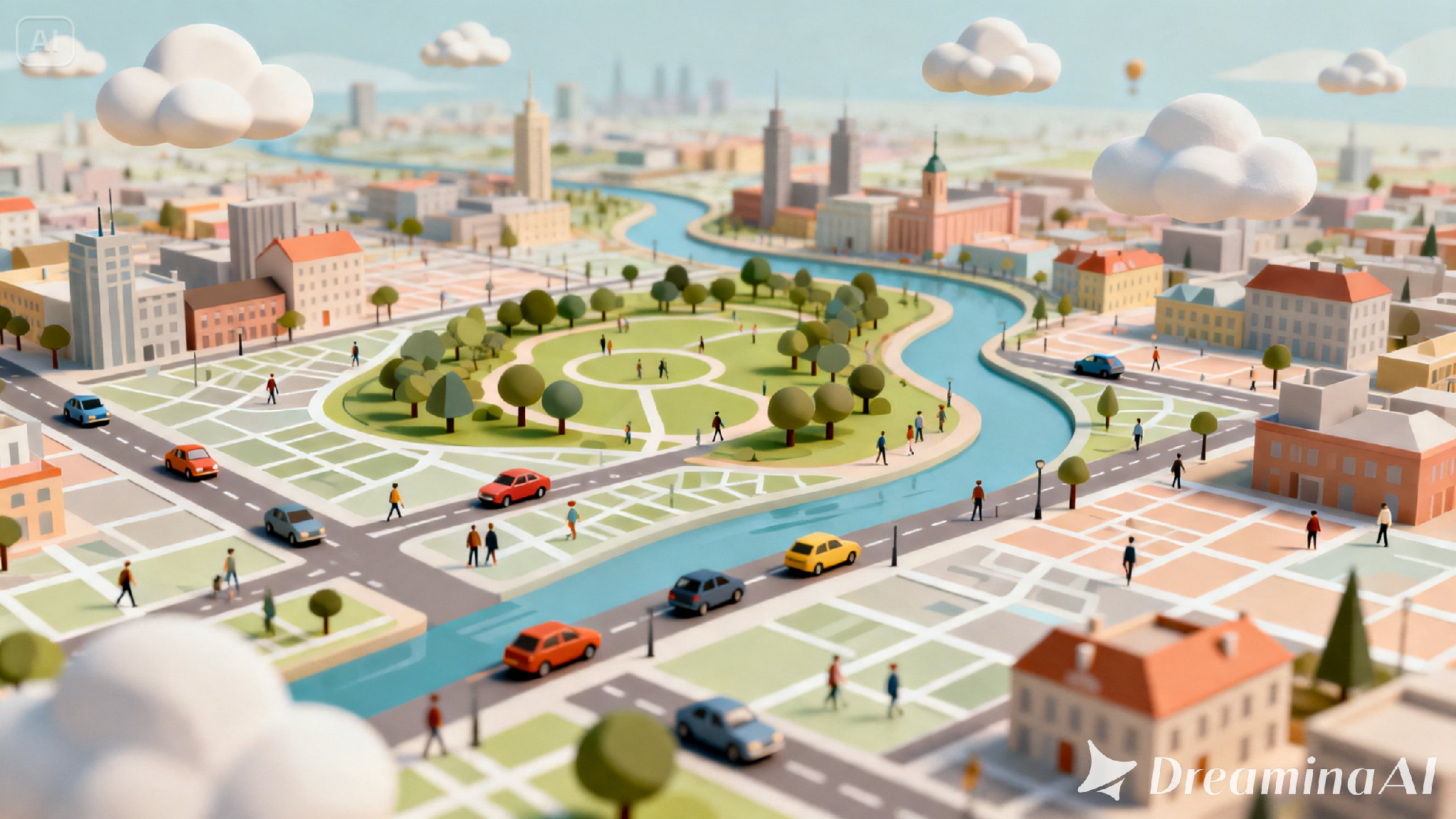
Creating Animated Maps from Static Graphics
A well-designed map can communicate a route, a journey, or a region at a glance, but on its own it asks the viewer to trace the path themselves. That’s fine for a printed brochure, but it works against you in a video-first world where people expect things to be shown rather than asked to figure them out. This is where image to video tools become genuinely useful, turning a flat map graphic into a guided visual journey that does the explaining for you. Dreamina, powered by its most advanced video generation model, Seedance 2.5, makes that shift possible without hiring a motion graphics specialist.
Why a static map leaves the viewer working too hard
A printed or digital map communicates geography, but the actual story, the journey, the pacing, the sense of distance, has to be imagined by the viewer. Animating the route finally tells that story directly instead of leaving it as an exercise for the audience, turning a static reference into something closer to a guided experience.
How do you create an animated map that is truly understandable?
The best map animations usually have several features in common, but the key to them is in describing the sequence correctly rather than the visual style itself:
- A path drawn sequentially in a logical way
- Markers appearing when needed, not all at once
- Pacing sufficiently slow to keep up with the animation
- Style matching that of the original map – funny or professional
How to animate your map with Dreamina
Step 1: Upload your map and provide the route description
Log in to Dreamina and click on the “AI Video” tab. Then click “Add reference image” to upload your map picture and write the description of the route movement.
Sample: “Based on this map, create a 30-second video where the dotted path line will be drawn step by step from the starting city to the destination, marker icons will appear softly when the line goes through them, and the camera will pan along the whole route.”
Step 2: Generate with Seedance 2.5
Select the Seedance 2.5 model, choose your video length, then pick an aspect ratio — 16:9 for a presentation or website, 9:16 for a travel-focused social post. Click Dreamina’s generate icon and let the route come to life.
Step 3: Refine and export the finished map video
Use Dreamina’s editing tools to finish it off. Upscale for crisper text and iconography, generate a soundtrack for a light, journey-appropriate audio layer, then export and drop it into your presentation, itinerary, or campaign.
What Seedance 2.5 brings to map animation
Seedance 2.5, Dreamina’s most advanced video generation model, offers the kind of controlled, sequential motion map content depends on.
Edits without redoing the route
Local editing allows one route detail or label to be adjusted without regenerating the entire animation, useful when a stop or destination changes late.
A fuller creative brief
Multimodal input support means a script or itinerary description can guide the pacing alongside the map graphic, giving the model more than just the image to work from.
A clean, professional file
Stray subtitles and unwanted background music are removed automatically, keeping the file clean for professional use, while reduced “AI look” keeps text, lines, and icons sharp instead of blurring during motion.
Ready for global audiences
Multilingual support makes it straightforward to adapt a single map for international travel or global audiences.
Writing prompts that guide the sequence
Describing the order in which elements should appear, path first, then landmarks, then labels, helps keep the animation legible, especially for anyone trying to actually follow the route rather than just watch it move.
Choosing the right length and pace
A shorter clip works well for a quick social teaser showing a route at a glance, while a longer version suits a detailed travel itinerary or transit explainer where viewers need time to actually absorb each stop along the way.
Determining the detail required by the viewer
It may not always be necessary to include every stop on the path when using an animated map. In cases where you are trying to create a quick social tease, it may work better to show just the beginning and ending stops with a line connecting them rather than every stop and landmark included on the path. When the viewer is expected to look at the information carefully, then use the detailed animation.
Mistakes that make a map animation harder to follow
A few habits tend to undercut clarity:
- Animating too many routes or icons at the same time
- Moving the path too quickly for the eye to actually track
- Skipping labels, leaving viewers unsure what they’re looking at
- Choosing a style that clashes with the map’s original tone, like overly playful motion on a formal transit diagram
Where animated maps get the most use
This format performs well in travel content, real estate location videos, transit and city guides, and event directions, where a route that draws itself tends to communicate far more clearly than a flat map a viewer has to interpret on their own. Event organizers have found it especially useful for guiding attendees through unfamiliar venues.
A static map was always describing a journey, it just needed a way to actually show it happening. With Dreamina and the sequencing precision behind Seedance 2.5, that journey can finally play out the way it was meant to be understood, without asking the viewer to do the mental work themselves.